Pärnu from Riga: Estonia's Summer Capital in a Day
Cross the border to Estonia's beach town and you'll find white sand, a 19th-century spa scene, and a wonderfully unhurried pace — all just a 2½-hour bus ride north of Riga, from as little as €5 each way.
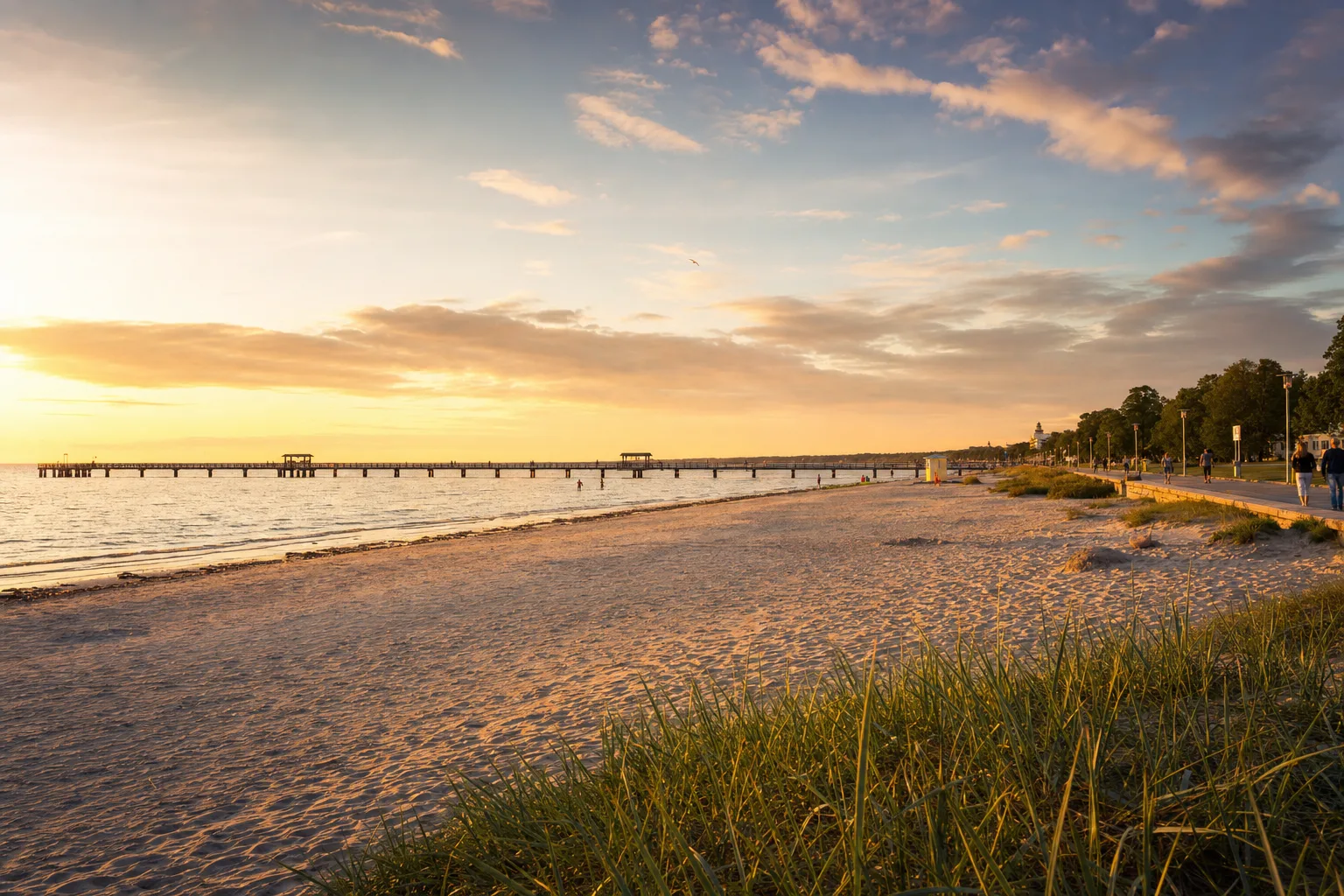
Riga is the obvious base for the region, but one of its best-kept secrets is how easy it is to cross into Estonia for the day. Head north for two and a half hours and you reach Pärnu — a low-slung resort town on the Baltic that Estonians simply call their summer capital. It's the kind of place where the day revolves around the beach, an afternoon spa, and a slow dinner by the promenade.
This guide covers how to get there, the best things to do, when to go, and whether to make it a day trip or an overnight escape from Riga.
Getting to Pärnu from Riga
The bus is the only sensible option, and happily it's frequent, cheap and comfortable. Lux Express and Ecolines between them run roughly 15–20 daily departures from Riga International Coach Station (next to the Central Market) to Pärnu Bus Station. The journey is about 2 hours 30 minutes, with no border formalities — both countries are in the EU and Schengen, and both use the euro.
Fares start around €5–6 on Ecolines economy tickets booked in advance, rising to roughly €10–20 closer to departure or on the more comfortable Lux Express coaches (which have free Wi-Fi, hot drinks and seat-back screens). The first buses leave Riga in the early morning, so an early start gets you onto Pärnu beach well before lunch.
Riga → Pärnu at a glance
| Distance | ≈ 185 km north |
| Journey time | ~2h 30m by direct bus |
| Fare (one way) | From ~€5 (advance) to ~€20 (peak) |
| Operators | Lux Express, Ecolines (also FlixBus) |
| Frequency | ~15–20 buses per day |
| Currency | Euro (no change from Latvia) |
Day trip or overnight?
For the Old Town and a few hours on the beach, a day trip works fine — catch an early bus up and a late-afternoon or evening one back. But Pärnu is at its best in the long summer evenings, when the promenade bars fill up and the light lingers past 10pm. If you're travelling in July or August, an overnight lets you enjoy that, sleep off a spa afternoon, and still get a full beach day.
Staying the night?
Pärnu's beachfront spa hotels are excellent value compared with Western Europe, and a spa room often costs only a little more than a standard one. Browse what's available for your dates:
Best things to do in Pärnu
1. Pärnu Beach & the promenade
The reason most people come. A wide, white-sand swimming beach a short walk from the centre, with shallow water that warms quickly in summer — genuinely swimmable from late June through August and gentle enough for families. The Beach Park and Supeluse Street lead straight down to the sand, lined with cafés, an outdoor gym, beach volleyball and tennis courts, mini-golf, and the playful 'Pärnu elephants' that have become the city's most-photographed spot.
Highlights:
- •White-sand swimming beach, walkable from the centre
- •Beach Park & Supeluse Street café strip
- •Beach volleyball, tennis, mini-golf, outdoor gym
- •Jetty walk for sunset views over the bay
2. Coastal meadow boardwalk
At the southern end of the beach, a 600-metre wooden boardwalk loops out over a protected coastal meadow and lagoon — a favourite nesting site for Baltic birdlife. It's a short, flat, easy walk you can tack onto a longer beach stroll, with a viewing platform looking back over the reeds and water.
Highlights:
- •600 m boardwalk over protected wetland
- •Viewing platform over the lagoon
- •Excellent birdwatching
- •Flat and easy — good for all ages
3. Old Town & Rüütli street
Pärnu's Old Town is low-key rather than grand — an eclectic, walkable mix of pastel timber houses, 18th-century churches and quiet courtyards. Rüütli, the main pedestrian street, threads through it with shops and cafés. The oldest surviving building, the Seegi maja almshouse, dates to 1658.
Highlights:
- •Rüütli pedestrian street — shops & cafés
- •Seegi maja almshouse (1658)
- •Pastel timber houses and quiet courtyards
- •Compact and entirely walkable
4. Tallinn Gate & the Red Tower
The Tallinn Gate (Tallinna värav) is the only surviving entrance to the old fortified town, designed by the same military engineer behind Narva's bastions. A few streets away, the Red Tower (Punane torn) is Pärnu's second-oldest building and the last fragment of its medieval castle — once a prison, now part of the town museum.
Highlights:
- •Tallinn Gate — last surviving town gate in the Baltics of its kind
- •Red Tower (Punane torn), Pärnu's medieval remnant
- •St Catherine's Church, commissioned after Catherine the Great's 1764 visit
- •Pärnu Museum for the deeper history
5. Spa & mud-bath culture
Pärnu has been a spa town since 1838 and was the Soviet Union's wellness retreat, drawing hundreds of thousands for mud baths and water cures. That heritage survives in a string of modern spa hotels along the beach — Hedon Spa occupies the original 1838 bathhouse — offering thermal pools, saunas and the local speciality, curative sea mud.
Highlights:
- •Spa-town heritage dating to 1838
- •Hedon Spa in the historic mud-bath building
- •Thermal pools, saunas, curative mud treatments
- •Several beachfront spa hotels to choose from
6. Soomaa National Park (day trip)
About 40 minutes inland, Soomaa is a wilderness of forest, river and raised bog — home to elk, wild boar, beaver and lynx. The Riisa study trail (the one reachable by public transport) runs on boardwalks across the bog; guided trips add bog-shoes in summer or snowshoes and a 'fifth season' of spring flooding when the rivers spill into the forest.
Highlights:
- •Raised-bog boardwalk trails
- •Bog-shoe walks (summer) and snowshoe trips (winter)
- •Canoeing during the spring 'fifth season' floods
- •Genuine Baltic wilderness, close to town
Tours & experiences in Pärnu
To reach Soomaa National Park or to add a guided bog walk, kayak trip or city tour, a booked experience saves the hassle of sparse rural transport. If you'd rather explore the wider region on your own schedule, a rental car picked up in Estonia is the most flexible option.
When to visit Pärnu
Pärnu is overwhelmingly a summer destination. The shallow bay warms faster than the open Baltic, making July and August the sweet spot for swimming and beach life. May, June and September are quieter and cheaper — ideal if the spas and Old Town interest you more than the water. Winter is cold and sleepy, but the snow-dusted beach and warm thermal pools have their own appeal.
| When | What to expect | Beach rating |
|---|---|---|
| Jun | Beach season opens, long daylight, water warming | ⭐⭐⭐⭐ |
| Jul | Peak summer — warmest sea, busiest beach, all venues open | ⭐⭐⭐⭐⭐ |
| Aug | Still warm and lively, slightly calmer late in the month | ⭐⭐⭐⭐⭐ |
| May / Sep | Mild shoulder season — quiet town, spa weather, fewer crowds | ⭐⭐⭐⭐ |
| Oct–Apr | Cold and quiet; atmospheric Old Town, spas, snowy beach | ⭐⭐⭐ |
Pärnu FAQ
How do you get from Riga to Pärnu?
By direct bus. Lux Express and Ecolines run roughly 15–20 services a day from Riga International Coach Station to Pärnu Bus Station. The trip takes about 2 hours 30 minutes and tickets start around €5–6 when booked ahead, typically €10–20 closer to travel.
Can you visit Pärnu as a day trip from Riga?
Yes. With buses leaving Riga from early morning, you can be on Pärnu beach before lunch and back the same evening. An overnight is better in peak summer to enjoy the beachfront nightlife and a spa, but a day trip works well for the Old Town and beach.
When is the best time to visit Pärnu?
July and August for the beach — the shallow sea is at its warmest and the promenade is at full tilt. May, June and September are quieter and ideal for the Old Town and spas. Winter is cold and sleepy but atmospheric.
Is Pärnu worth visiting?
If you want beach time, spa culture and a relaxed small Estonian town, yes — it's Estonia's summer capital for good reason. For dramatic medieval sights, Tallinn or Riga's Old Town deliver more; Pärnu is about slowing down.
Do you need euros in Pärnu?
Estonia uses the euro, the same as Latvia, so there's no currency change crossing the border. Cards are accepted almost everywhere.
Keep planning your Baltic trip
Last updated: June 2026. Bus times and fares from Lux Express, Ecolines and aggregator timetables — always confirm current schedules and prices before travelling. Some links on this page are affiliate links; if you book through them we may earn a small commission at no extra cost to you.